AREAVISION: website, back office and app
For a Swiss company that installs electronic shelf labels: the website, the back office that takes shop prices to the labels, and the app for shop staff.
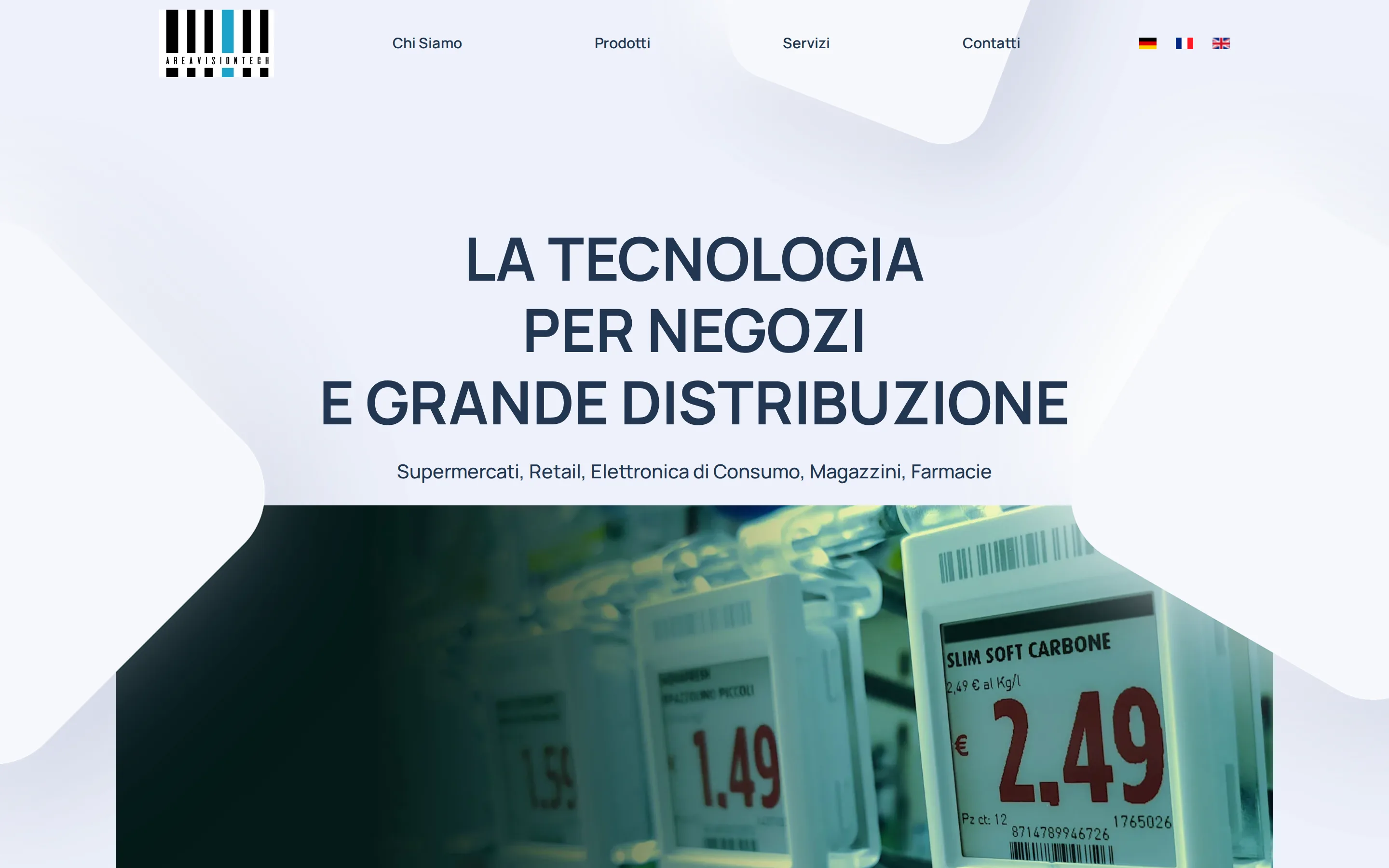
- Client
- AREAVISION Sagl
- Work
- website, business web app and app
- Technology
- PHP, MySQL, Bootstrap, jQuery, Leaflet, PWA, NFC and camera for codes, Zkong cloud API, FTP
- Online
- areavisiontech.eu
What it does
AREAVISION brings electronic shelf labels (ESL), digital signage and the cloud platforms that drive them to shops and supermarkets. For them I built the website, areavisiontech.eu, and two pieces of software.
The back office sits between the clients' shops and the labels' cloud. Each shop sends its price files over FTP; the back office logs them, skips the ones identical to the previous file, maps the columns to the label fields and transforms them with chained rules: price format, leading zeros, EAN codes to build, price per kilo. Every night it counts each shop's labels, model by model, and sends an email if a process gets stuck.
The app is for people working in the shop, handheld scanners included. It finds a product from its barcode, links it to its label read by NFC, camera or scanner, and makes the right labels' LEDs flash: for a promotion, a restock, products near their expiry date.
How it's built
Back office and app are PHP with MySQL and talk to the Zkong label cloud through its API. The back office also creates the shops' FTP accounts and shows the map of the stores with Leaflet and OpenStreetMap.
The app is a PWA with Bootstrap 5; it reads codes with the phone's camera and imports shelves from Excel.
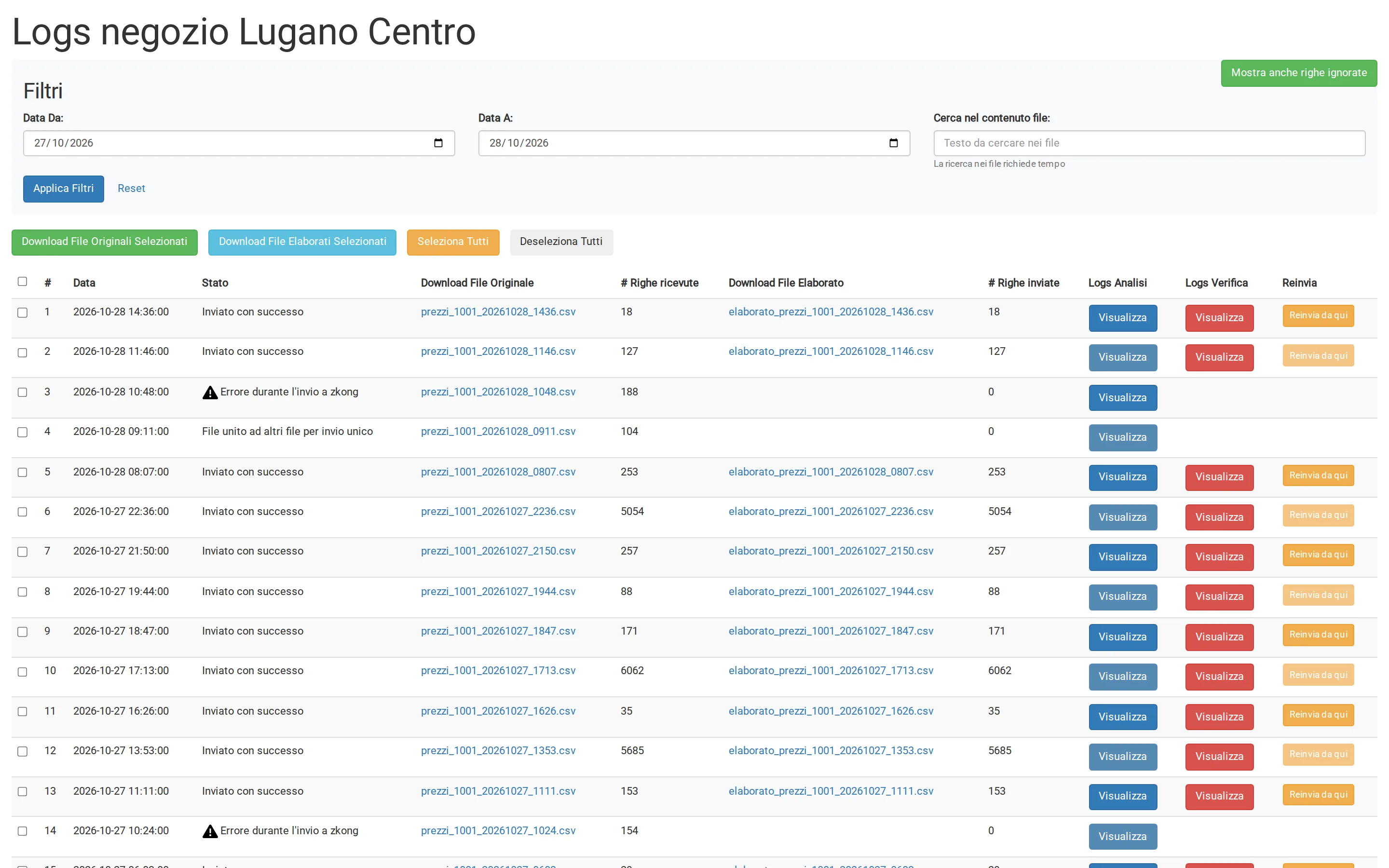
Back office: price files received over FTP for a shop, with rows received and sent 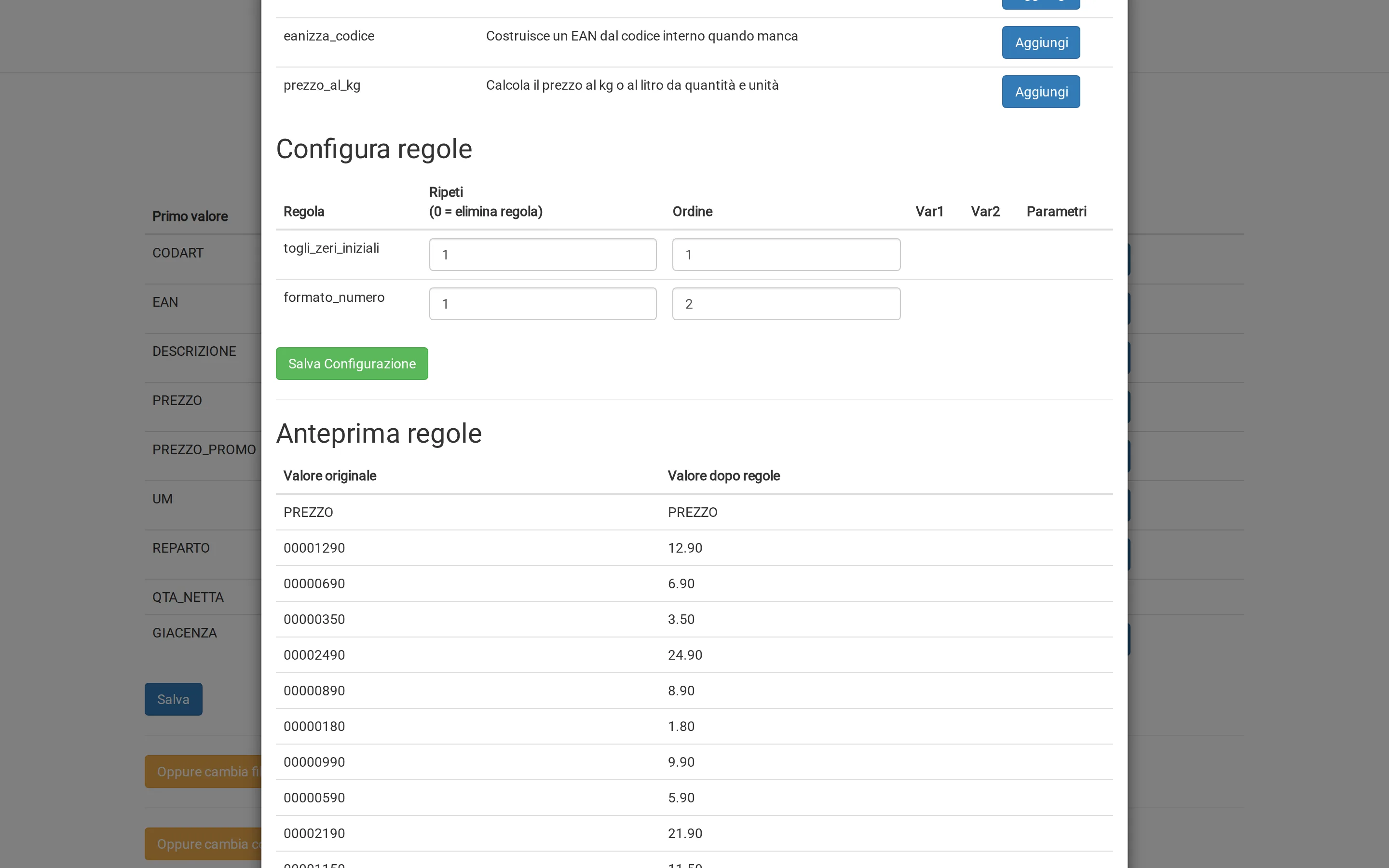
Back office: chained rules on a price list column, with a preview of the result 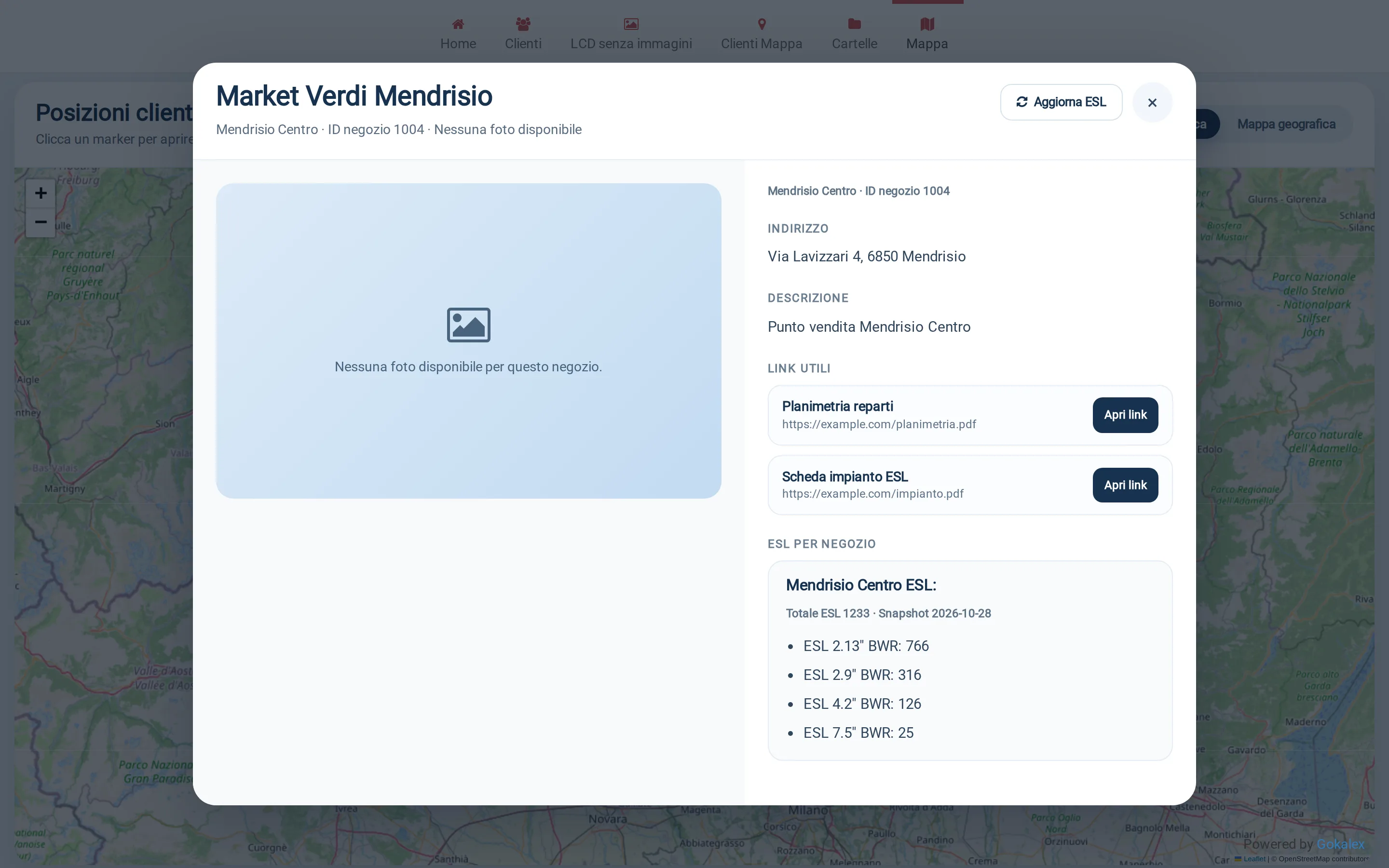
Back office: map of the shops with the labels counted that day, model by model 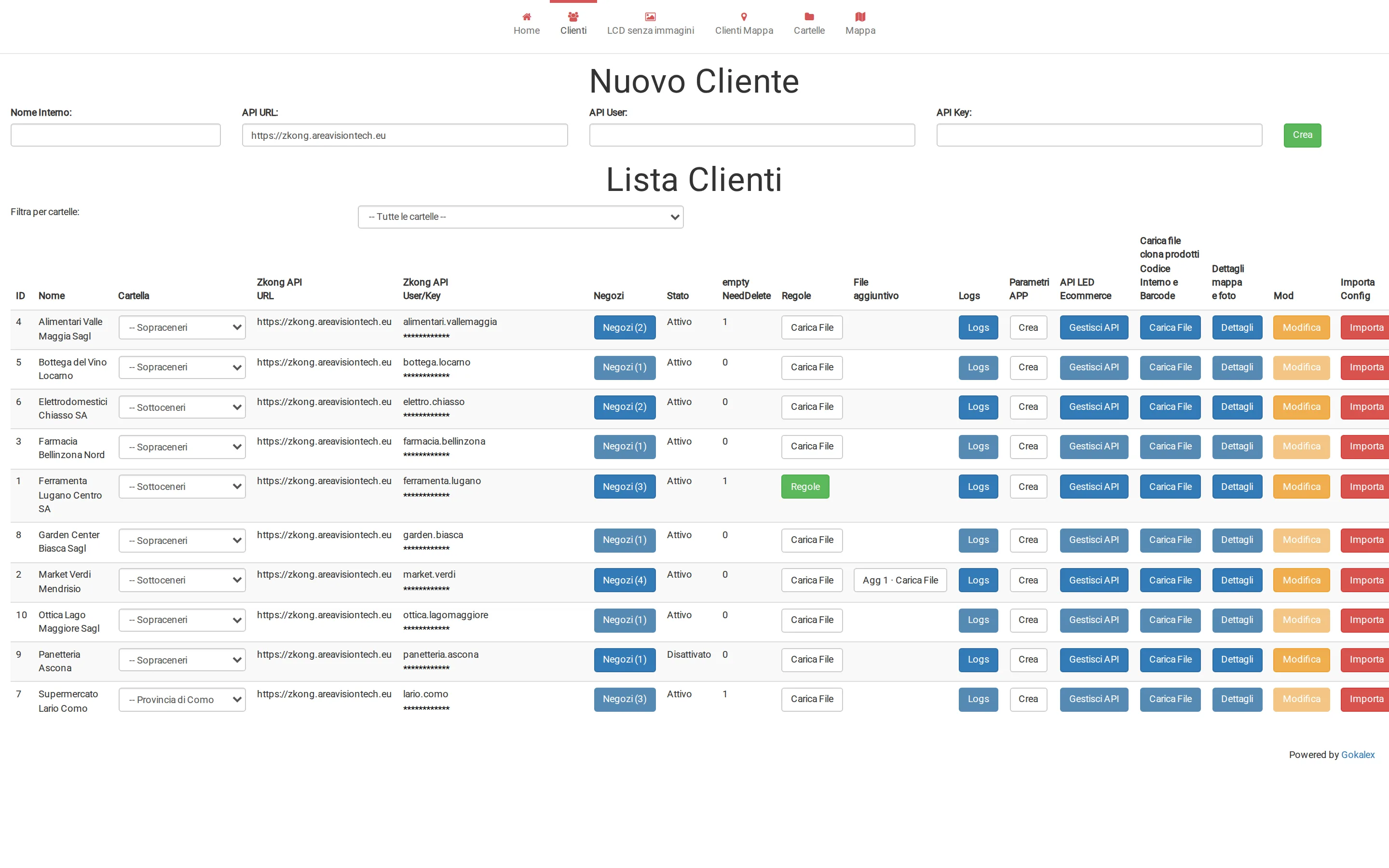
Back office: clients and shops linked to the label cloud
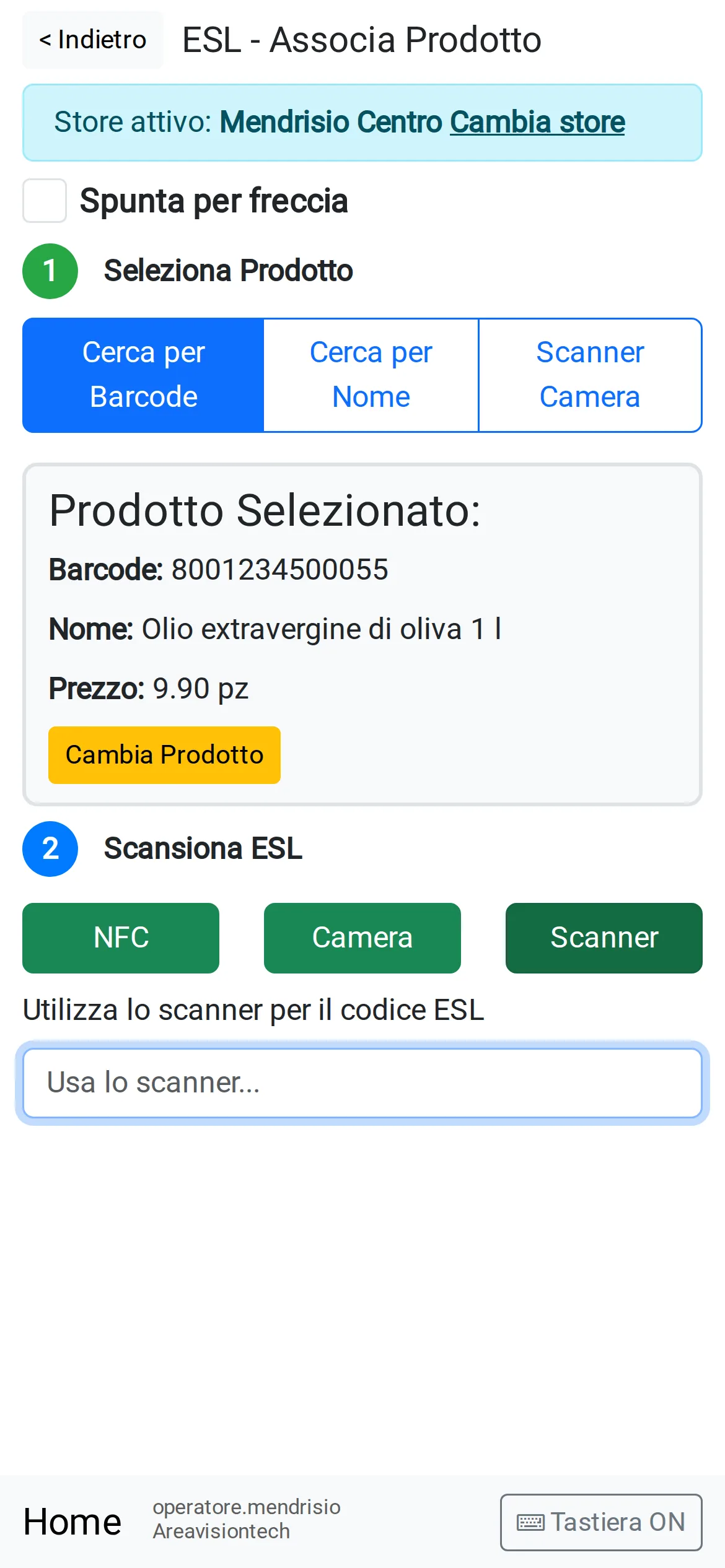
App: linking a label to a product with NFC, camera or scanner 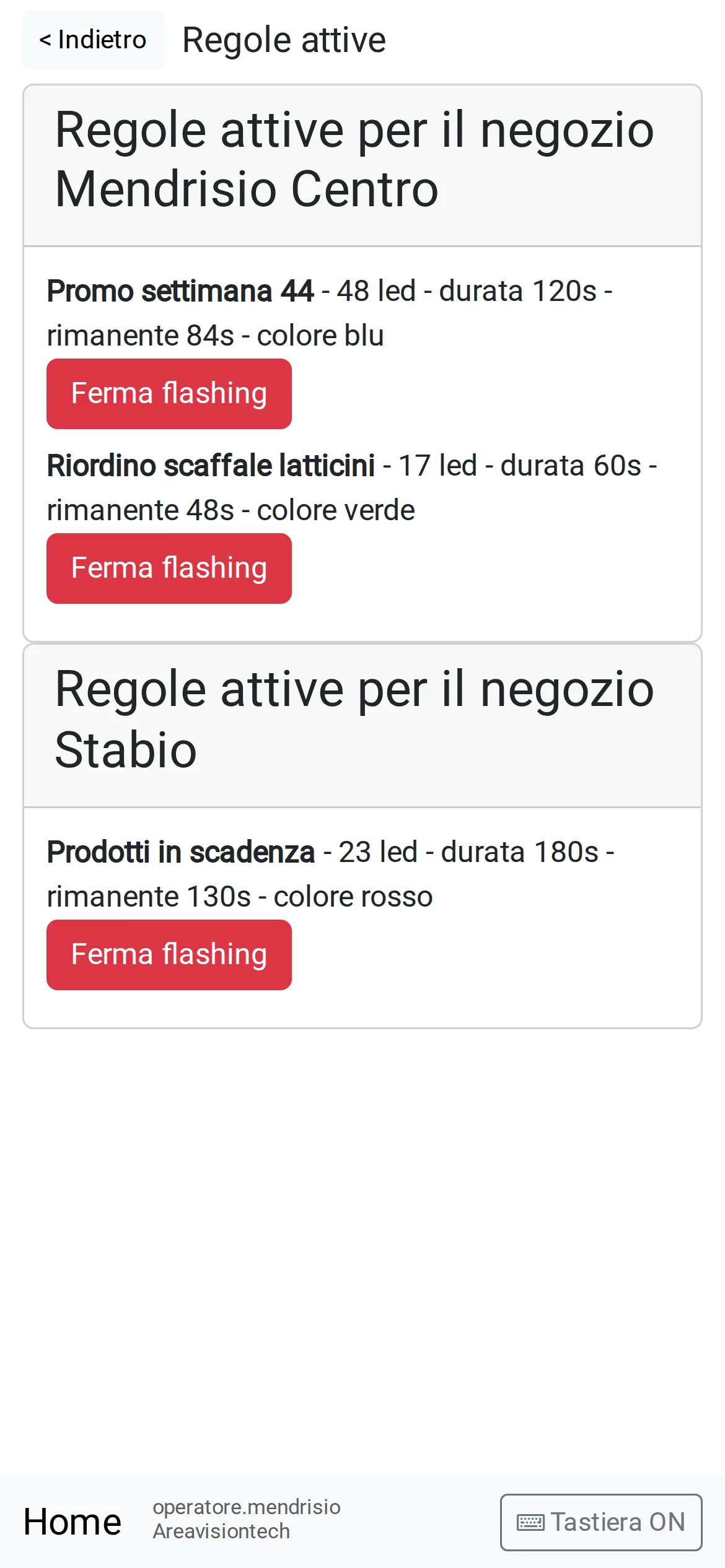
App: the labels flashing in each shop 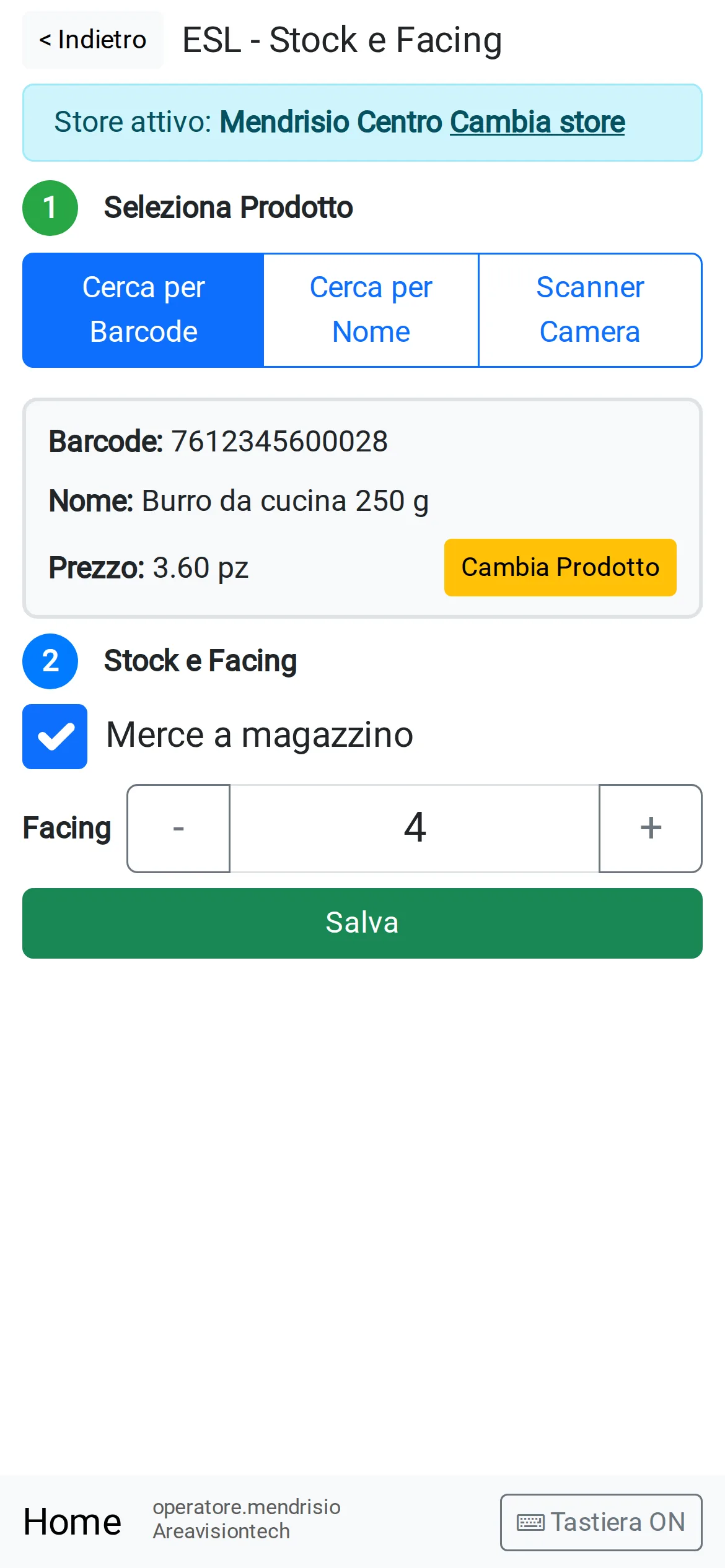
App: stock and facing of a product 
The website on a phone
The screens of the software come from test copies filled with made-up data.